Quick Summary
The 2026 BMW X5 offers a wide engine range topping out at 523 horsepower, standard all-wheel drive, and a cabin built to a premium standard across every trim. The Jeep Compass runs a single 200-horsepower engine across its entire lineup, with standard 4×4 and a lower starting price aimed at compact SUV buyers. Both SUVs serve very different budgets and priorities, but the X5’s power, cabin quality, and drivetrain flexibility give it a clear advantage for drivers who want a genuinely premium daily vehicle.
The 2026 BMW X5 and the Jeep Compass sit at very different points in the SUV market, and Long Island shoppers researching both nameplates need to understand the gap up front. The X5 delivers a wide engine range and standard all-wheel drive within a genuinely premium package, while the Compass offers a single, straightforward powertrain and a lower price aimed at compact SUV buyers.
Drivers weighing these two vehicles should consider budget, cabin quality, and long-term ownership expectations before deciding. Shoppers who want to see BMW’s full current lineup can browse the new vehicle inventory before choosing a trim.
This comparison breaks down design, technology, safety, and performance to help Long Island drivers understand where each SUV stands.
Design & Style
The X5 carries a bold, sculpted profile with a large kidney grille, sharp LED headlights, and available 20 to 22-inch wheels depending on trim. The cabin pairs a digital gauge cluster with a curved center display, and materials throughout reflect a genuinely premium build across every trim level.
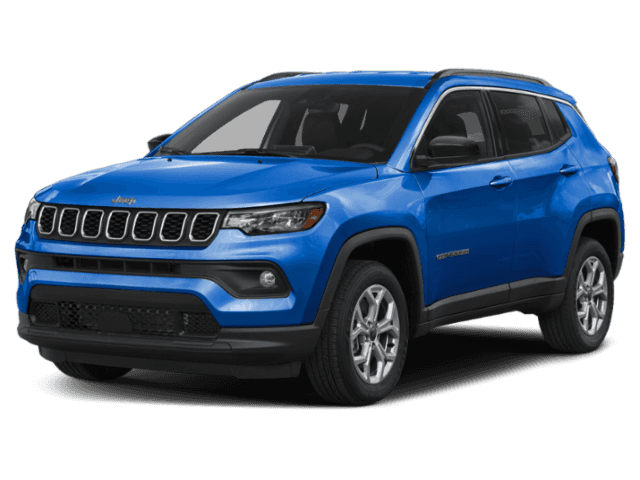
The Compass wears a smaller, more compact shape, with LED reflector headlamps, black exterior accents, and wheel sizes ranging from 17 to 19 inches. The Trailhawk trim adds underbody skid plates and all-terrain tires for a more rugged look, while the standard cabin offers cloth, leatherette, or leather upholstery depending on trim.
Both vehicles suit their intended buyers well, but the X5’s larger footprint and premium materials place it in a completely different class than the compact, budget-focused Compass.
Technology & Safety
BMW equips the X5 with a full suite of standard driver-assistance features, including blind-spot alert, a collision warning system, and emergency and security services across all trims. The curved digital display integrates navigation, driver information, and infotainment into a single connected interface designed for daily driving.
The Compass brings a competitive safety package for its segment, with standard forward collision warning, automatic emergency braking, lane-keeping assist, and blind-spot monitoring. Higher trims add adaptive cruise control and a 360-degree surround-view camera, giving Compass buyers solid coverage for the price.
Both vehicles pack in genuine safety technology, but the X5’s system integrates with more polish and consistency, reflecting its position in a higher market tier than the Compass.
Performance
The X5 sDrive40i and xDrive40i feature a 3.0-liter TwinPower Turbo inline-six with a 48V mild hybrid system, producing 375 horsepower and 398 lb-ft of torque, and are paired with an 8-speed Sport Automatic. The xDrive50e plug-in hybrid combines the same six-cylinder engine with an electric motor for a combined 483 horsepower, and the M60i tops the lineup with a 4.4-liter twin-turbo V8 producing 523 horsepower.
The Compass runs a single 2.0-liter turbocharged four-cylinder engine across every trim, producing 200 horsepower and 221 lb-ft of torque, paired with an 8-speed automatic and standard 4×4. Maximum towing capacity reaches 2,000 pounds, positioning the Compass as a practical, everyday compact SUV rather than a performance vehicle.
The gap in output between these two nameplates is substantial, with even the X5’s base engine nearly doubling the Compass’s horsepower output.
The Bottom Line
Choosing between these two SUVs comes down almost entirely to budget and vehicle class. The Compass suits buyers who want a compact, efficient SUV with standard 4×4 and a lower price point for daily commuting and light adventure.
The X5 makes more sense for drivers who want a genuinely premium SUV with a wide performance range, standard all-wheel drive, and a cabin built to a higher standard throughout. For Long Island drivers ready to invest in a more capable, comfortable daily vehicle, the X5 delivers a driving experience the Compass simply isn’t built to match.
Schedule a Test Drive Today
Spec sheets only tell part of the story, and the difference in cabin quality and drivetrain confidence shows up clearly once a driver spends real time behind the wheel. The 8-speed Sport Automatic, standard xDrive all-wheel drive, and cabin materials all make a stronger impression on the road than on paper.
Competition BMW of Smithtown carries the full 2026 X5 lineup, from the efficient sDrive40i to the high-output M60i, and the sales team can walk through trims, financing, and current offers in detail. Long Island drivers ready to compare these SUVs firsthand can schedule a test drive at the Saint James showroom today.
FAQs
How much horsepower does the Jeep Compass produce compared to the X5?
The Compass produces 200 horsepower from its single 2.0-liter turbocharged engine. The X5’s base engine produces 375 horsepower, nearly double the Compass’s output.
Is all-wheel drive standard on both the X5 and the Compass?
Yes. The X5 includes standard all-wheel drive on every trim, and the Compass includes standard 4×4 across its lineup as well, though the systems differ in capability and design.
Which SUV offers more towing capacity?
The X5 offers significantly higher towing capacity across its lineup than the Compass, which tops out at 2,000 pounds. The X5’s stronger engines support heavier loads for road trips and hauling.