Quick Summary
The 2026 BMW X3 delivers sharper handling, a more refined cabin, and up to 393 horsepower on its top trim, while the GMC Acadia offers three-row seating and a single 328-horsepower turbo engine across its entire lineup. Buyers choosing between these two are largely weighing luxury refinement against family-focused seating capacity. Long Island drivers who prioritize handling, cabin quality, and daily performance over a third row find the X3 the stronger option.
The 2026 BMW X3 and the GMC Acadia both sit in the midsize SUV segment, but they prioritize different things. The X3 delivers a refined, driver-focused cabin with turbocharged performance across two distinct trims, while the Acadia offers three-row seating and a single powertrain built for family duty.
Long Island shoppers cross-referencing these two SUVs need to weigh cabin quality and handling against passenger capacity before deciding. Drivers who want to see BMW’s full range of current models can browse the new vehicle lineup before choosing a trim.
This comparison breaks down the design, technology, safety, and performance of a luxury crossover and a family-oriented SUV to help Long Island drivers decide between them.
Design & Style
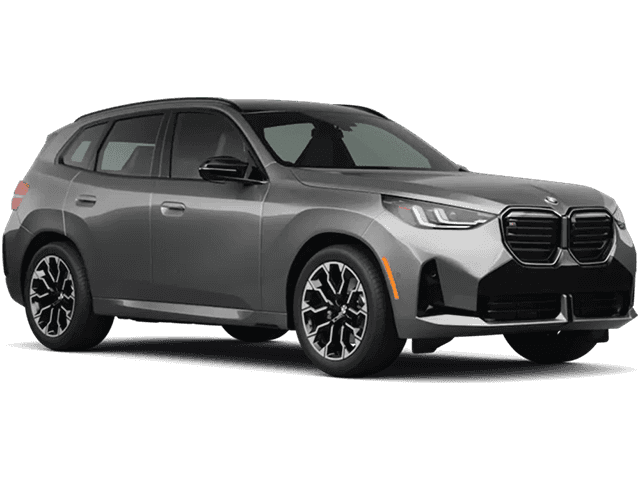
The X3 wears a sculpted, unibody profile with a sharp-edged kidney grille, angular LED headlights, and 19-inch wheels wrapped in satin aluminum trim. The cabin follows a driver-focused layout, with tightly stitched materials and a dash angled toward the driver’s seat.
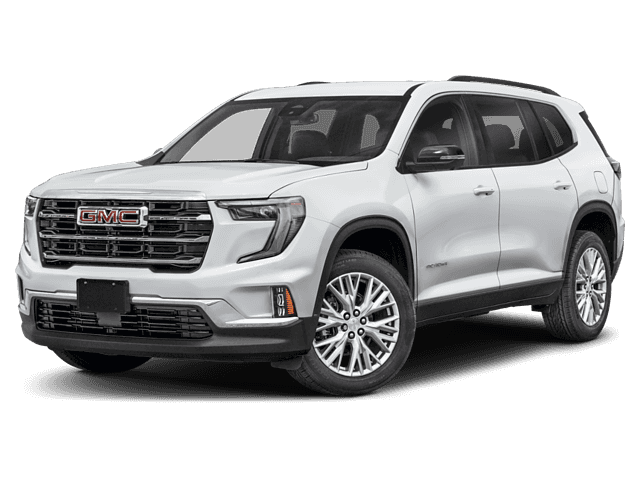
The Acadia carries a bolder, truck-inspired front end, with a wide grille that changes pattern by trim, from chrome slats on the Elevation to a blacked-out grid on the Denali Ultimate. Wheel sizes range from 18 inches on base trims up to 22 inches on higher configurations, giving the Acadia a burlier stance than most midsize crossovers.
Both SUVs project confidence on the road, but the X3’s tighter proportions and refined detailing lean toward luxury, while the Acadia’s larger dimensions and third-row layout lean toward family practicality.
Technology & Safety
BMW equips the X3 with a full suite of standard driver assistance features, including Active Blind Spot Detection, Lane Departure Warning, and Frontal Collision Warning with City Collision Mitigation. Active Driving Assistant integrates these systems into a single interface that responds quickly in both highway driving and stop-and-go traffic.
The Acadia brings its own strong safety package, with standard blind-spot alert, enhanced automatic emergency braking, and an HD surround-view camera across the lineup. Driver Attention Assist comes standard on the top trim and optional on others, and every Acadia includes pedestrian detection as part of its base equipment.
Both automakers pack in extensive safety tech, but the X3’s infotainment system integrates more tightly with its driver-assistance suite, giving it a more cohesive daily experience than the Acadia’s.
Performance
The X3 30 xDrive uses a 2.0-liter TwinPower Turbo four-cylinder engine with a 48V mild-hybrid system, producing 255 horsepower and 295 lb-ft of torque through an 8-speed STEPTRONIC automatic. Standard xDrive all-wheel drive keeps the chassis composed through corners, and drivers who want more can step up to the X3 M50 xDrive with its 393-horsepower turbocharged inline-six.
The Acadia uses a single 2.5-liter turbocharged four-cylinder engine across all trims, producing 328 horsepower and 326 lb-ft of torque through an 8-speed automatic. Front-wheel drive comes standard, with all-wheel drive available, and the Acadia can tow up to 5,000 pounds with the Trailering Package.
The Acadia’s engine outmuscles the base X3 on paper, but the X3’s chassis tuning and available M50 xDrive trim give it a sharper, more engaging feel for drivers who prioritize handling over sheer output.
The Bottom Line
Choosing between these two SUVs comes down to what a driver needs day-to-day. The Acadia suits buyers who want three-row seating, strong towing capacity, and a single, straightforward engine option across the lineup.
The X3 makes more sense for drivers who want a refined cabin, sharper handling, and a choice between efficient and high-output engine options. For Long Island commuters who don’t need a third row, the X3’s driving character and interior polish give it the edge over the larger, family-focused Acadia.
Schedule a Test Drive Today
Spec sheets only tell part of the story, and the difference in refinement between a luxury crossover and a family SUV shows up clearly behind the wheel. The 8-speed transmission, xDrive all-wheel drive, and cabin materials all make a stronger impression once a driver spends real time on the road.
Competition BMW of Smithtown carries the full 2026 X3 lineup, from the efficient 30 xDrive to the high-output M50 xDrive, and the sales team can walk through trims, financing, and current offers in detail. Long Island drivers ready to compare these SUVs firsthand can schedule a test drive at the Saint James showroom today.
FAQs
Does the GMC Acadia offer more horsepower than the base X3?
Yes. The Acadia’s 2.5-liter turbo engine produces 328 horsepower, above the X3 30 xDrive’s 255 horsepower. The X3 M50 xDrive surpasses both at 393 horsepower.
Does the X3 offer three-row seating like the Acadia?
No. The X3 seats five passengers in a compact SUV layout, while the Acadia offers three rows and seating for up to eight.
How much can the GMC Acadia tow compared to the X3?
The Acadia can tow up to 5,000 pounds with the Trailering Package. The X3 focuses on daily handling and performance rather than heavy-duty towing.