Quick Summary
The 2026 BMW X3 delivers a refined unibody design, a fully integrated tech suite, and stronger on-road performance with up to 393 horsepower on the M50 xDrive. The Ford Everest offers rugged, truck-based capability suited to towing and off-road use, but its cabin polish and tech integration fall short of the X3’s. For Long Island drivers prioritizing daily comfort, quicker acceleration, and a more cohesive driving experience, the X3 comes out ahead.
Long Island drivers cross-shopping midsize SUVs often land on two very different approaches to the same goal. The 2026 BMW X3 takes the luxury crossover route, pairing turbocharged power with a refined cabin and sharp handling.
The Ford Everest takes a truck-based approach instead, built for towing and rough terrain across global markets. Both vehicles compete in the seven-passenger-adjacent SUV space, but the platforms, drivetrains, and everyday driving character set them apart quickly. Drivers who want a full look at what BMW currently offers can browse the full new vehicle lineup to see how the X3 fits among other models.
This comparison breaks down the design, technology, safety, and performance of each SUV so shoppers can decide which SUV best matches their priorities on Long Island roads.
Design & Style
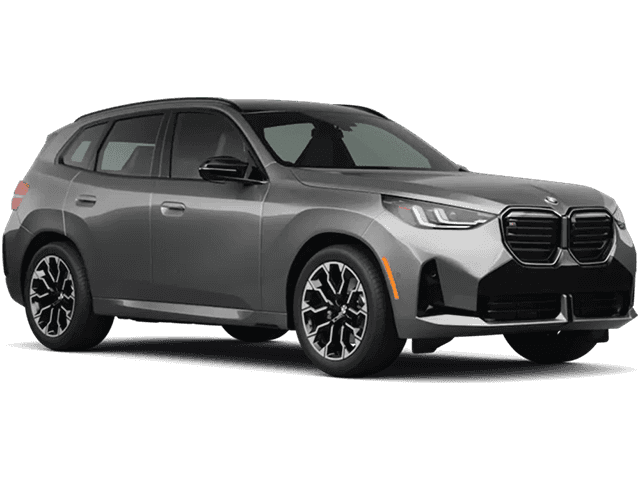
The X3 wears a sculpted, unibody silhouette with a sharp-edged kidney grille, angular LED headlights, and a stance that reads as athletic rather than utilitarian. Nineteen-inch wheels and satin aluminum trim frame the exterior, and the cabin carries that same precision inside.
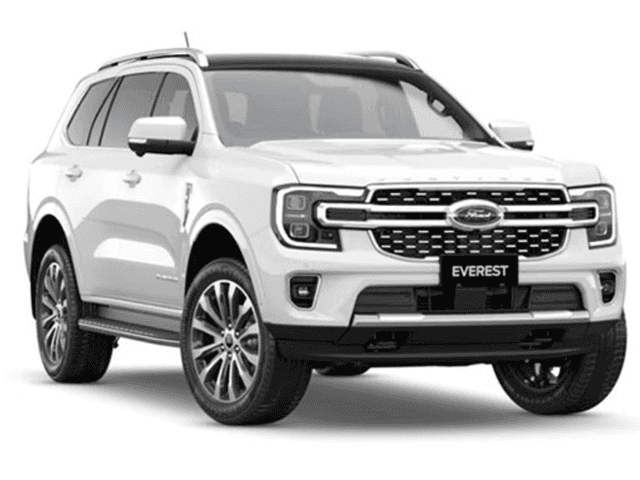
Tightly stitched upholstery, a driver-focused dash layout, and premium finishes give the interior a genuine luxury feel. The Everest takes design cues from the Ranger pickup it shares a platform with, giving it a boxier, body-on-frame profile with a wide front grille, LED daytime running lights, and a front bumper shaped for off-road clearance.
That construction gives the Everest a rugged, workhorse appearance suited to towing and trail use. It comes at the cost of the tighter road manners and cabin polish that define the X3’s design language.
Technology & Safety
BMW equips the X3 with a full suite of driver assistance features as standard, including Active Blind Spot Detection, Lane Departure Warning, and Frontal Collision Warning with City Collision Mitigation. Active Driving Assistant adds a further layer of protection for daily commuting and highway driving.
The cabin pairs a digital instrument cluster with an intuitive infotainment system running BMW’s latest software, and every menu and control ties back to one central interface. The Everest brings a competitive safety package for its segment, too, with features like a 12.4-inch configurable digital display on higher trims and driver-assistance tech across most markets.
Wireless smartphone integration rounds out the Everest’s tech offering, but the systems often feel like separate features layered onto a truck-based architecture. The X3’s tech set works together with more polish and less friction for everyday drivers.
Performance
Under the hood, the X3 30 xDrive runs a 2.0-liter TwinPower Turbo four-cylinder engine paired with a 48V mild hybrid system, producing 255 horsepower and 295 lb-ft of torque through an 8-speed STEPTRONIC automatic. Standard xDrive all-wheel drive keeps power distribution sharp in any condition.
Drivers who want more can step up to the X3 M50 xDrive, which swaps in a 3.0-liter turbocharged inline-six producing 393 horsepower and 428 lb-ft of torque, backed by adaptive suspension and M Sport brakes. The Everest, by comparison, leans on diesel and turbocharged petrol options depending on market, typically a 2.0-liter bi-turbo four-cylinder diesel or a 3.0-liter V6 diesel.
A 10-speed automatic and four-wheel drive built for low-range off-road use complete the Everest’s setup. Those numbers suit heavy towing and unpaved trails, but the X3’s engine lineup delivers quicker acceleration and a more engaging feel on paved roads.
The Bottom Line
Choosing between these two SUVs comes down to how a driver plans to use it. The Everest makes sense for buyers who prioritize towing capacity, low-range four-wheel drive, and a body-on-frame chassis built for rough terrain.
The X3 makes more sense for drivers who want a refined daily driver with strong on-road performance, a driver-focused cabin, and a badge that carries weight in the driveway and on the resale market. For most Long Island commutes, weekend drives, and the occasional road trip, the X3’s blend of comfort, technology, and available power gives it a clear edge over a truck-based SUV designed primarily for off-road duty.
Schedule a Test Drive Today
Long Island drivers who want to feel the difference between a luxury crossover and a truck-based SUV should get behind the wheel of the X3 for themselves. Numbers on a spec sheet only tell part of the story.
The 8-speed transmission, xDrive all-wheel drive, and cabin materials make a stronger impression in person. Competition BMW of Smithtown carries the full 2026 X3 lineup, from the efficient 30 xDrive to the high-output M50 xDrive, and the sales team can walk through trims, financing options, and current offers.
FAQs
Is the Ford Everest sold in the United States?
No. Ford builds the Everest primarily for markets like Australia, Southeast Asia, and South Africa. US buyers looking for a comparable Ford model typically consider the Bronco or Explorer instead.
What is the horsepower difference between the X3 trims?
The X3 30 xDrive produces 255 horsepower, while the M50 xDrive delivers 393 horsepower from its turbocharged inline-six engine.
Does the 2026 X3 come standard with all-wheel drive?
Yes. Every 2026 X3 trim includes BMW’s xDrive all-wheel-drive system paired with an 8-speed automatic transmission.