Quick Summary
The 2026 BMW X3 offers a compact, agile footprint with turbocharged efficiency and quicker daily handling, while the Cadillac Escalade delivers full-size space, V8 towing muscle, and seating for up to eight. Buyers choosing between these two are really choosing between two different vehicle classes rather than two similar competitors. Long Island drivers who want a more maneuverable daily driver with strong performance in a smaller package find the X3 the better fit.
The 2026 BMW X3 and the Cadillac Escalade both wear luxury badges, but they serve very different roles on Long Island roads. The X3 delivers a compact, turbocharged footprint built for daily commuting and agile handling, while the Escalade brings full-size space, V8 power, and heavy-duty towing capacity to the driveway.
Shoppers cross-referencing these two SUVs need to think first about size and use case before comparing specs line by line. Drivers who want to explore BMW’s current lineup can browse the new vehicle inventory before settling on a trim.
This comparison breaks down design, technology, safety, and performance to help Long Island drivers weigh a compact SUV against a full-size flagship.
Design & Style
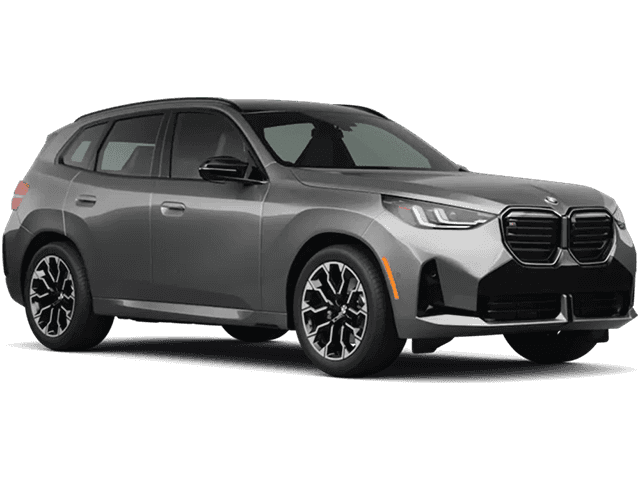
The X3 carries a sculpted, athletic profile with a sharp-edged kidney grille, angular LED headlights, and 19-inch wheels wrapped in satin aluminum trim. The compact footprint makes it easy to park on tight Long Island streets while still delivering a premium cabin with tightly stitched materials.
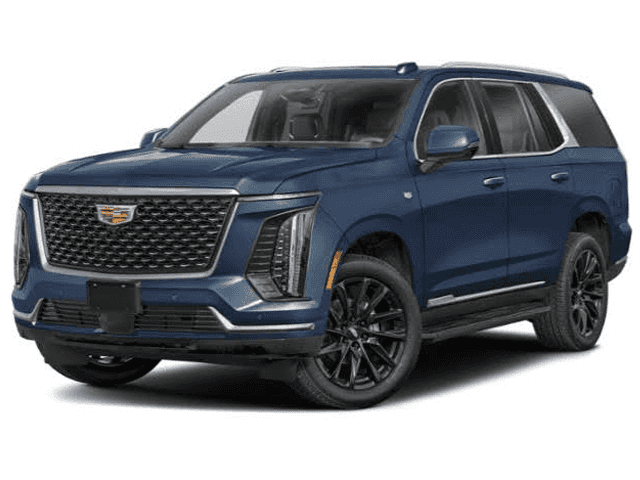
The Escalade takes the opposite approach, with a massive, imposing presence built around vertical LED lighting, a wide chrome grille, and up to 24-inch wheels on higher trims. Inside, a curved 55-inch OLED display and three rows of seating give the Escalade a genuinely different scale of luxury built for large families and long trips.
Both vehicles project premium styling, but the X3 suits drivers who want agility and easy parking, while the Escalade suits buyers who prioritize sheer presence and interior space.
Technology & Safety
BMW equips the X3 with a full suite of standard driver assistance features, including Active Blind Spot Detection, Lane Departure Warning, and Frontal Collision Warning with City Collision Mitigation. Active Driving Assistant integrates these systems into a single interface designed for both daily commuting and highway driving.
The Escalade counters with its own extensive tech package, headlined by the curved OLED display that spans the dashboard and houses navigation, driver information, and entertainment on a single continuous screen. Standard and available safety features include a surround-view camera system, adaptive cruise control, and Super Cruise hands-free driving technology on select trims.
Both automakers pack serious technology into their respective SUVs, but the X3’s compact tech stack delivers greater agility, while the Escalade’s larger screen real estate suits passengers who spend long hours in the back seat.
Performance
The X3 30 xDrive uses a 2.0-liter TwinPower Turbo four-cylinder engine with a 48V mild-hybrid system, producing 255 horsepower and 295 lb-ft of torque through an 8-speed STEPTRONIC automatic. Standard xDrive all-wheel drive keeps the chassis composed through corners. Drivers who want more can step up to the X3 M50 xDrive with its 393-horsepower turbocharged inline-six.
The Escalade uses a naturally aspirated 6.2-liter V8 producing 420 horsepower and 460 lb-ft of torque, paired with a 10-speed automatic, with rear-wheel or four-wheel drive available. That setup gives the Escalade a maximum towing capacity of up to 8,100 pounds, far beyond anything the X3 offers.
The two vehicles serve entirely different priorities, with the X3 built for efficient daily performance and the Escalade built for towing power and highway cruising in a much larger frame.
The Bottom Line
Choosing between these two SUVs comes down to size and purpose rather than a direct feature comparison. The Escalade suits buyers who need three-row seating, heavy towing capacity, and a commanding road presence for long family trips.
The X3 makes more sense for drivers who want a nimble, efficient luxury SUV for daily commuting around Long Island, without the size and fuel costs that come with a full-size flagship. For most everyday driving needs, the X3’s smaller footprint and stronger fuel economy make it the more practical choice.
Schedule a Test Drive Today
Spec sheets only tell part of the story, and the compact agility of a smaller SUV becomes clear once a driver takes it through Long Island traffic. The 8-speed transmission, xDrive all-wheel drive, and tight turning radius all make a stronger impression behind the wheel than on paper.
Competition BMW of Smithtown carries the full 2026 X3 lineup, from the efficient 30 xDrive to the high-output M50 xDrive, and the sales team can walk through trims, financing, and current offers in detail. Long Island drivers ready to compare these SUVs firsthand can schedule a test drive at the Saint James showroom today.
FAQs
How much towing capacity does the Escalade offer compared to the X3?
The Escalade can tow up to 8,100 pounds with its standard 6.2L V8 engine. The X3 focuses on daily performance rather than heavy-duty towing capability.
Does the X3 offer three-row seating like the Escalade?
No. The X3 seats five passengers in a compact SUV body, while the Escalade offers three rows and seating for up to eight.
Which SUV gets better fuel economy?
The X3’s turbocharged four-cylinder engine delivers better fuel efficiency than the Escalade’s 6.2L V8. The Escalade prioritizes towing power and interior space over efficiency.